
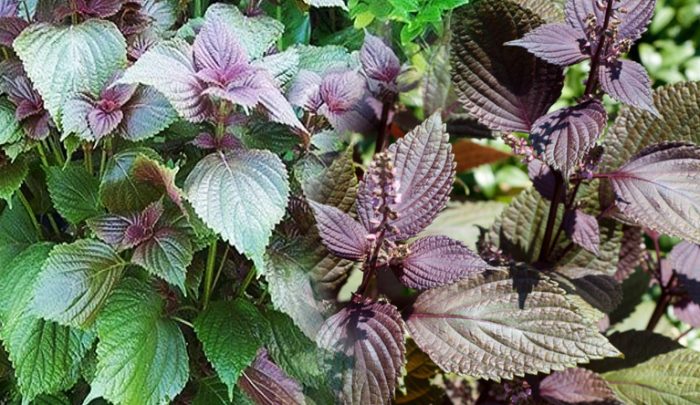
Commonly seen as an invasive weed in the Western world, perilla (Perilla frutescens) is actually a prized herb hailing from Asia. It’s native to mountainous areas in Southeast Asia and India and is widely cultivated in East Asia as a popular crop. As a hardy and self-sowing plant, it can be found in just about any sunny areas like roadsides, streambanks, and even in your own lawn. It’s part of the mint family and there are different Perilla variants. The Korean variant has broad and rounded leaves, while the Shiso variant has smaller leaves and is more popular in Japan.
Edibility and culinary use
Perilla shows up a lot in East Asian cuisine, especially Japanese and Korean dishes. It’s a very delicious vegetable that tastes great in salads, soups, or stir-fried dishes. The leaves have a pleasantly unique taste that’s more like a combination between mint and fennel. The taste pairs extremely well with rice, seafood, grilled meat, chili, soy sauce, garlic, and tofu. So, keep that in mind while planning your next meal with perilla.
This wild edible tastes best fresh but they can also be dried or pickled for later consumption. Koreans usually add it to kimchi by marinating the leaves in a mixture of soy sauce, chili, and herbs. Dried leaves can also be steeped in hot water to make a soothing, minty tea.
Additionally, you can also eat other parts of this plant. The flower spikes can be cooked in soups or deep fried to make delicious tempura. Perilla sprouts can also be cooked and eaten like a potherb. Lastly, the seeds can be toasted and used as a spice or as a source of oil. Though you should only eat perilla oil cold and never use it for frying. Because when heated, the oil can release lung toxins.
Health benefits
People have been using perilla as a medicinal herb since the ancient Chinese era. It has shown some antioxidant, antiallergic, and anti-inflammatory properties. This herb is mainly used to treat asthma, cough, chest congestion, and nausea.
This herb is also very rich in vitamin C and contains a good amount of some minerals, such as calcium and iron. Then, while it doesn’t contain any protein, it’s a rich carbohydrate and fiber source for our body. Eating perilla makes you feel full longer and promotes healthy digestion. Additionally, it can also prevent diabetes and heart disease.
Cultivation
With bushy foliage and a lovely array of colors, perilla is a great addition to your garden, both as an ornamental plant and as a food source. Moreover, this plant can attract pollinators, like butterflies, to your garden. Perilla isn’t difficult to cultivate, maybe even too easy. In fact, this plant spreads so easily that it may take over your whole garden if you let them.
As a summer annual plant, it thrives best in warm, humid climates. It can grow in any type of soil, but perilla prefers moist, well-drained soil. A sunny location would be best, but it can tolerate some shade. This plant requires a medium amount of water, be careful not to flood the soil. Before sowing, soak the seeds in water for 24 hours to ensure germination. Then start sowing the seeds in early spring, they should take a week or so to germinate. By summer, there will be an abundance of leaves ready for you to harvest.
Cautions
Perilla has been shown to cause dermatitis on some people. So, it’s wise to wear gloves while handling this wild edible. Also, there’s not enough reliable information on how perilla consumption may affect pregnant and breastfeeding women. So, stay on the safe side and avoid consuming it if you’re pregnant or breastfeeding.
Lastly, this herb is toxic to animals, including cows, horses, and even dogs. It can cause pulmonary edema, respiratory problems, and even death in animals. So, be careful not to feed any to your pets.
Conclusion
Despite being very popular in the East, perilla is very underutilized as a wild edible in the West. Perhaps, it’s time for a perspective change. With its unique taste and its many edible parts, this “invasive weed” can actually be used as a valuable and delicious source of nutrients. Moreover, this self-seeding plant spreads and grows quickly. That means you can harvest an abundance of leaves and seeds and not worry about killing off the population. So, take a look around your house, see if you can find any perilla growing, and try tasting this delicious wild edible.
Source: Eat the planet
Vea (Ms.)
Mobile/whatsapp: 84 333999402
Email/skype: sales5@safimex.com
SAFIMEX JOINT STOCK COMPANY
Head Office: 216/20a Duong Ba Trac Street, Ward 2, District 8, Hochiminh City, Vietnam.
Tel: (+84)-(28)-3636 2388 | (+84)-(28)-3636 2399| Web: Www.Safimex.Com
