
As pet owners increasingly prefer natural and eco-friendly products, the coffee wood chew stick has become one of the most popular dog chew options worldwide. Made from retired coffee trees, these chew sticks are durable, chemical-free, and sustainable.
However, producing a high-quality coffee wood chew stick requires a careful process to ensure safety, durability, and smooth finishing. Manufacturers must follow several steps to transform raw coffee branches into safe chew toys for dogs.
In this article, we explore the five key stages of producing coffee wood chew sticks, from raw wood preparation to final polishing.
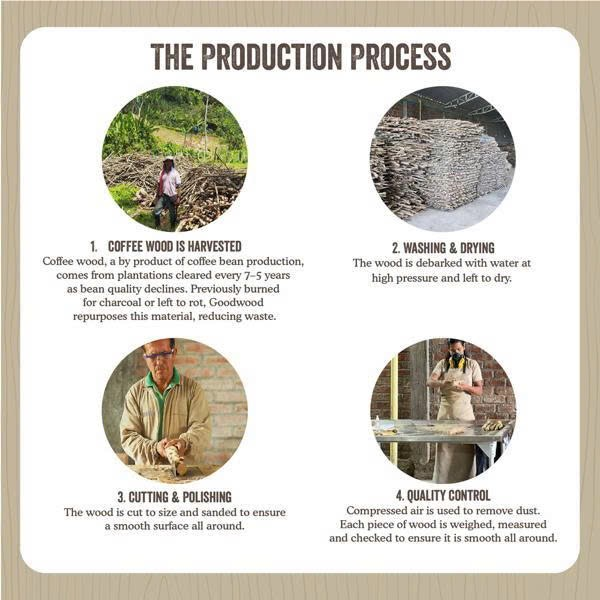
The Production Process: From Coffee Wood to a Finished Product
Our products are made from recycled coffee wood, a natural material that would otherwise often be burned or left to decay after the coffee trees become less productive. By giving this wood a second life, we can create useful products while helping to reduce agricultural waste. The entire production processThe first step is to carefully collect the coffee wood from coffee plantations. Coffee trees are normally productive for several years, but consists of four important stages: harvesting, washing and drying, cutting and polishing, and quality control.
- Coffee Wood Harvesting
The first step is to carefully collect the coffee wood from coffee plantations. Coffee trees are normally productive for several years, but after approximately 5–7 years, their productivity begins to decline. At this stage, the old or unproductive trees are removed to make room for new ones. Instead of burning the old branches and trunks or leaving them to rot, the wood is collected and transported for further processing.
This approach allows us to repurpose a by-product of coffee production and turn it into a valuable raw material. It also helps reduce waste and provides an environmentally friendly alternative to simply discarding or burning the wood. After harvesting, the selected wood is sorted and prepared for the next stage of production.
- Washing and Drying
Once the coffee wood arrives at the production facility, it goes through a thorough washing process. The wood is cleaned using high-pressure water to remove dirt, dust, mud, and other impurities that may have accumulated during harvesting, transportation, or storage.
After washing, the wood needs to be properly dried before it can be processed further. The pieces are placed in a suitable area and allowed to dry naturally. Proper drying is an important step because it helps reduce excess moisture in the wood and prepares the material for cutting and polishing. Only when the wood is sufficiently dry can it move on to the next stage of production.
- Cutting and Polishing
After the wood has been cleaned and dried, it is carefully cut into the required sizes and shapes according to the specifications of the final product. Skilled workers select and handle each piece to make sure the material is processed appropriately.
The cut pieces are then sanded and polished to create a smooth and clean surface. This stage requires careful attention to detail because the surface of the wood needs to be comfortable to touch and suitable for the final application. Sanding also helps remove rough edges and imperfections, while polishing enhances the natural appearance and texture of the coffee wood.
- Quality Control
The final and equally important stage is quality control. Every finished piece is carefully inspected before it is approved for use or shipment. During this process, each piece is weighed and measured to make sure it meets the required specifications.
In addition to checking the size and weight, workers carefully examine the surface of each piece to ensure that it is smooth, clean, and free from excessive defects. Any piece that does not meet the required standards is separated for further processing or rejected. This careful inspection helps ensure that only products meeting our quality requirements move forward to packaging and delivery.
From Waste to Value
Through these four stages, old coffee trees are transformed from agricultural waste into useful, carefully finished products. From the initial harvesting of the wood to the final quality inspection, every step is carried out with attention to both product quality and responsible use of natural resources. This process not only gives coffee wood a second life but also contributes to a more sustainable and waste-conscious production model.
Why the Production Process Matters
The quality of a coffee wood chew stick depends heavily on proper manufacturing. Each stage—from drying to polishing—plays a critical role in ensuring the chew is safe, durable, and enjoyable for dogs.
When produced correctly, coffee wood chews offer several advantages:
- Natural and chemical-free material
- Long-lasting durability
- Support for dog dental health
- Sustainable use of agricultural resources
Vietnam’s coffee-growing regions provide an abundant supply of coffee wood, making the country an important manufacturing hub for natural dog chews.
Looking for a reliable eco-friendly pet product manufacturer?
Contact Safimex today to discover our complete range of sustainable pet products and explore customized OEM and ODM solutions for your brand at info@safimex.com or click at https://www.alibaba.com/product-detail/Wholesale-Coffee-Wood-Dog-Chew-Toy_10000045054817.html?spm=a27gk.ggs-spa.0.0.c97aoVdToVdTE5
SAFIMEX JOINT STOCK COMPANY
Head Office: 216/20a Duong Ba Trac Street, Ward 2, District 8, Hochiminh City, Vietnam
Tel: (+84)-(28)-3636 2388 | (+84)-(28)-3636 2399 | Website: https://safimex.com/
