
Word association time! I say chile pepper, you say . . .
All right, so this is a bit of a one-sided conversation, but my guess is something along the lines of “hot” or “spicy.”
Chile peppers, however, can be so much more than that, especially in their dried form. If most of your experience with chile peppers has been of the raw or ground variety, you’re in for a real treat once you start dabbling with dried chiles.
“With dried chiles, you can do so much,” says Pati Jinich, chef, cookbook author and host of “Pati’s Mexican Table” (the new season starts airing nationwide on public television Sept. 8). Jinich is an avowed dried-pepper enthusiast who uses them in her cooking about five times a week.
Jinich says home cooks should be thinking about dried chiles more as a fruit or vegetable than as merely a vehicle of heat, especially because some aren’t hot at all. Indeed, upon opening a bag of dried anchos for one of Jinich’s salsas, I immediately caught a whiff of prunes. Depending on your imagination or inclination and the type of pepper, you might detect flavors of smoke, chocolate, even red wine.
Given that versatility in flavor, not to mention preparation, here are tips to help you get started using dried chile peppers.
Get familiar with a few varieties first
In her book “Peppers of the Americas,” chef and author Maricel E. Presilla has almost 20 pages of photos and descriptions devoted to dried peppers. I suspect that is just a small fraction of what’s out there. Going to your local Latin market can present you with a wealth of options, too. Instead of attempting to try them all (or being overwhelmed and giving up), Jinich suggests three starter peppers.
First is the ancho, “the workhorse of the Mexican kitchen,” according to Presilla. Anchos are the dried form of poblano peppers. Jinich describes anchos as having a flavor that combines prunes, chocolate and sour notes. They’re not typically that spicy, but they can lend foods a deceptive red color that makes you think they’re spicier than they are. Presilla also assigns them a “slight tomato-like acidity.” Anchos are flat, wrinkly and almost heart-shaped, with a black-brown-red color.
Another good entry point is the guajillo, Jinich says. She describes it as peppy — not very spicy, not sweet, but able to contribute seasoning to a dish. It’s relatively smooth, shiny and red.
Lastly, Jinich recommends the chile de arbol. These are most similar to the crushed red pepper flakes you are familiar with, although Jinich says the peppers also boast a somewhat nutty flavor. When you want clean heat, this is the pepper to grab. They are small, thin and bright red.
Once you feel comfortable with these peppers — or before, if you’re intrepid — start branching out to others such as chipotles (smoky dried jalapeños) or pasillas, which Jinich describes as having a more bitter edge. Presilla writes that pasillas are “sweet with a distinct grassy flavor and a bit of acidity.”
Buying and storing
Dried peppers “can get extremely dry and brittle,” says Jinich, which makes them harder to work with. At the store, try to find peppers that are still malleable (the larger ones, anyway, such as ancho); you should be able to feel that through the package. Look for peppers with vivid, rather than faded, color.
Presilla suggests buying prepackaged dried peppers rather than loose, the latter of which are exposed to less-controlled storage conditions.
Once you’re home, and especially after you’ve opened the package, keep the peppers in an airtight bag or container to prevent them from drying out. You want them in your typical pantry setting — cool, dry and dark. Stored properly, they will keep “forever and ever,” Jinich says.
Prepping
To clean or not to clean your dried peppers? In the yes camp is Presilla. “Years of experience have led me to a sobering realization: At many stages from field to display bin, dried peppers are left open to contamination by small animals or insects,” she writes, adding, bluntly, that she treats all commercial peppers as “potentially unsanitary.” She recommends rinsing them in plenty of cold water, draining well and letting them air-dry. Jinich falls into the no-rinsing camp. Do you rinse off your cinnamon stick or bay leaf, she asks?
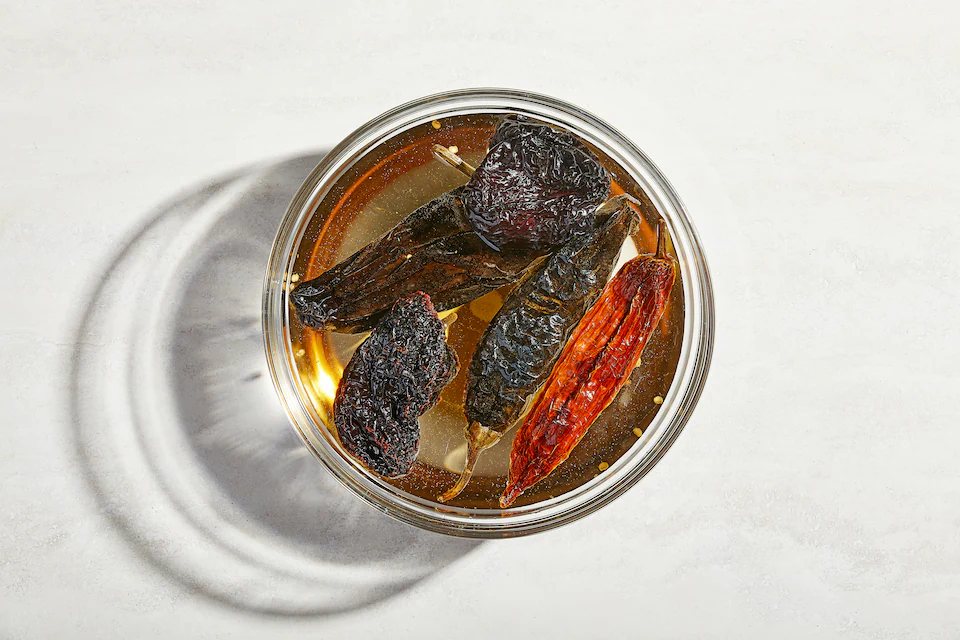
Whether you’ve toasted the peppers or not, a common preparation is to rehydrate the peppers in warm or boiling water for up to half an hour. Of course, if you’re adding the peppers to something like a soup, stew, or cooked salsa or sauce, they can just rehydrate during cooking, Jinich says. You can turn the rehydrated pepper into a paste in a food processor or blender (use some of the soaking liquid if you need to) to incorporate into dishes.
Another option: Dried-pepper powder. Grind dried peppers (toasted or not) in a coffee grinder or spice mill. (If they’re pliable and soft, Presilla suggests drying them in a 200-degree oven for an hour first.) Or just crumble them into flakes with your fingers or a mortar and pestle.
A word of warning, from personal experience: If you, like me, have sensitive skin and it tends to sting when dealing with raw peppers, the same might happen when dealing with dried peppers. It didn’t even occur to me — whoops! If you feel the need to take precautions (vigorous hand-washing, gloves, other “hot pepper hands” remedies), do so.
Cooking with them
Even if you don’t make dishes designed specifically for dried peppers, there are plenty of ways to add them to your regular repertoire. They can blend seamlessly into soups, stews, chili and tomato sauce. Use them to supplement, or star in, a meat or fish marinade. Or work them into your favorite brownie or other chocolate dessert.
Jinich likes to incorporate chile de arbol into her salad vinaigrettes or crumble it on pasta and pizza just like crushed red pepper flakes.
If you’re looking for dishes that really highlight dried peppers, you may not find a dish more emblematic than mole, a rich, aromatic and thick sauce or paste synonymous with Mexican cuisine.
Salsas based on dried peppers are flavorful, delicious and versatile, too. You’ll find a pickled ancho version from Jinich below, but she also makes a salsa macha from fried guajillos that she uses as a marinade or in fish tacos.
Jinich isn’t sure why it hasn’t caught on much here yet, but she endorses rehydrating whole peppers to stuff with your choice of meat, cheese and vegetables. She sees no limit to what you can do with dried peppers. “You really can use them for everything,” she says.
Safimex company has supplying Dried chili with a good price for bulk order. If you are interested in this product, please feel free to contact us at info@safimex.com or click at https://www.alibaba.com/product-detail/Wholesale-dried-hot-spicy-chili-good_10000014879521.html?spm=a2747.product_manager.0.0.67882c3c0RS5EY
Source: Washington post
SAFIMEX JOINT STOCK COMPANY
Head Office: 216/20a Duong Ba Trac Street, Ward 2, District 8, Hochiminh City, Vietnam.
Tel: (+84)-(28)-3636 2388 | (+84)-(28)-3636 2399 | Website: https://safimex.com/
