
Solitary bees aren’t like honey bees that live in hives. As their name suggests, they make their nests on their own and lay their eggs in tunnels, such as in dead wood or hard soil. A bee hotel mimics these conditions, providing easily accessible space for egg-laying.
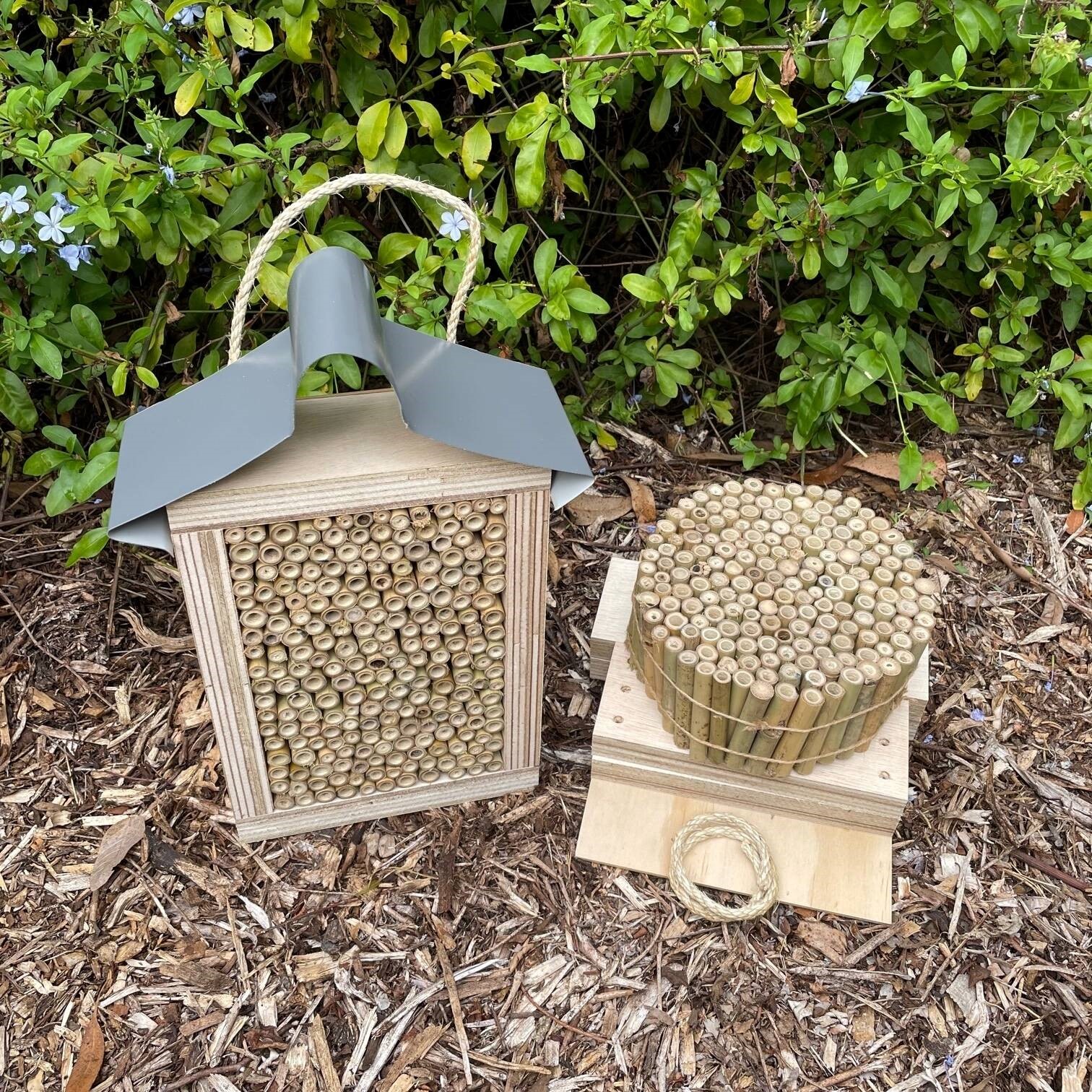
You can make your bee hotel whenever the mood takes you, but spring is when potential residents are queueing up for the best new abode. Sit and watch adult female bees find the nest on sunny days in spring. You’ll know they’re nesting if you see them flying in with pollen (some carry it on their bellies), with blobs of mud to create cell walls along the tube, or with bits of leaf (these are the Leaf-cutter Bees).
How to build a bee hotel
What you’ll need
- Offcuts of planks of wood 1.5cm thick
- Saw
- Nails
- Drill
- Brown paper
- Pencil
- Measuring tape
- Sticky tape
- Bamboo canes
- Hollow plant stems
- Reeds
- Chunks of untreated hardwood or logs
Instructions
A box of holes
In a nutshell, you’re aiming to make a box or container stuffed full of different-sized hollow tubes, each with a dead end, around 15cm or so long.
You can get really creative with your materials and designs; just make sure your masterpiece is robust enough to stay outdoors for several years.
Buying a ready-made bee hotel is the easy way to do it if you don’t have the time or the right tools. Choose one with several different sizes of tubes – different species of bee like different diameter tunnels.
Make your bee hotel
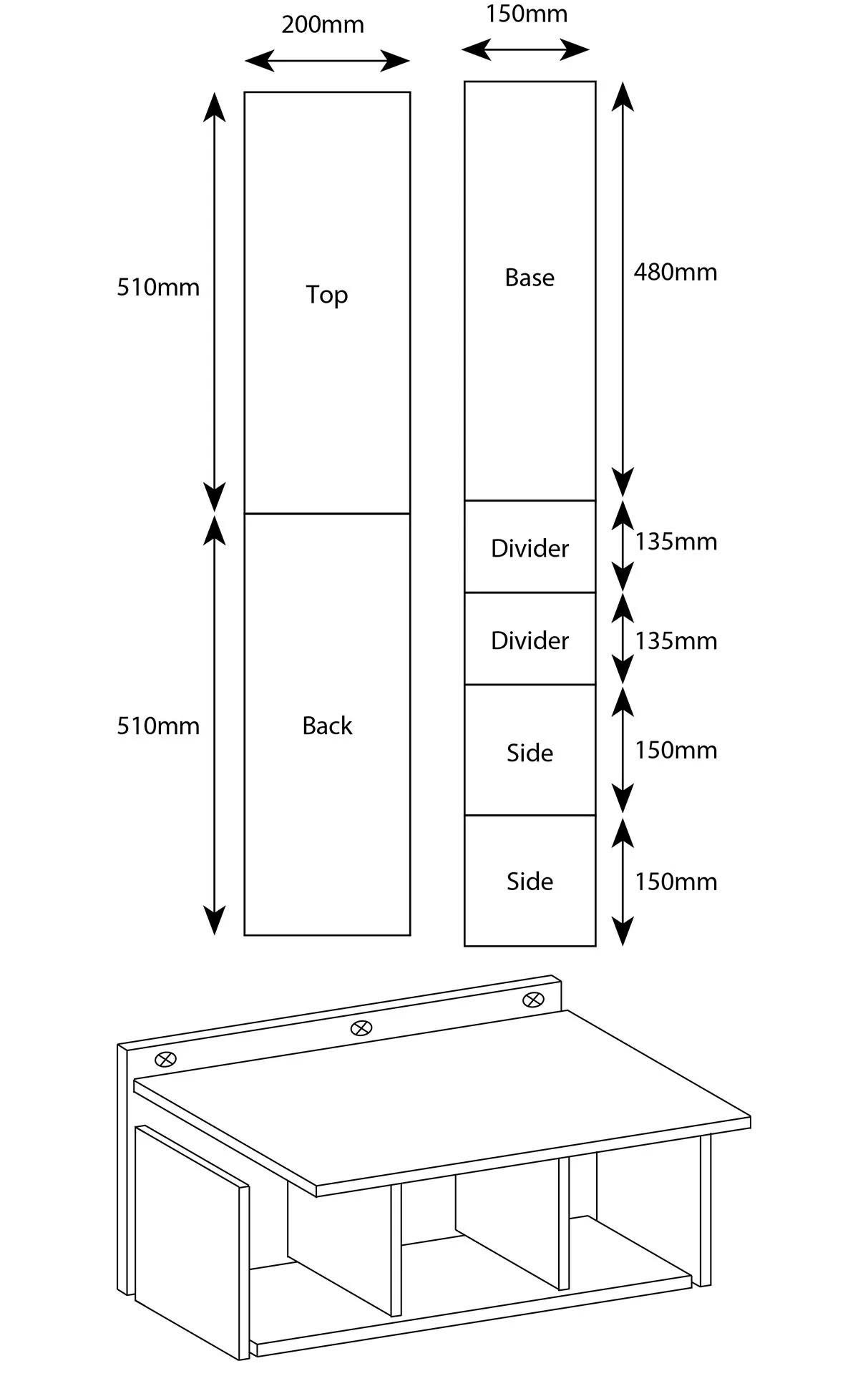
We’ve come up with a simple design for you to try, but if you are nifty with carpentry, feel free to make your own. For our version, source a plank of timber (with the FSC logo, which means it comes from a sustainable source) about 1.5 cm thick and cut into the shapes shown to make a box with three compartments. Nail it together.
If you make your own, make sure it is 15 cm deep and the roof has a good overhang to keep off the rain. How you design your roof depends on your carpentry prowess. You can turn it vertically, give it a pitched roof or make it in the shape of St Paul’s Cathedral. Please send us your pictures.
Note: the dimensions shown are for 15mm thick wood. If your wood is different to that, the dimensions of the Base should be 510mm minus 2 x thickness of the wood, and the side pieces should be 135mm + thickness of wood.
Create the nesting tubes
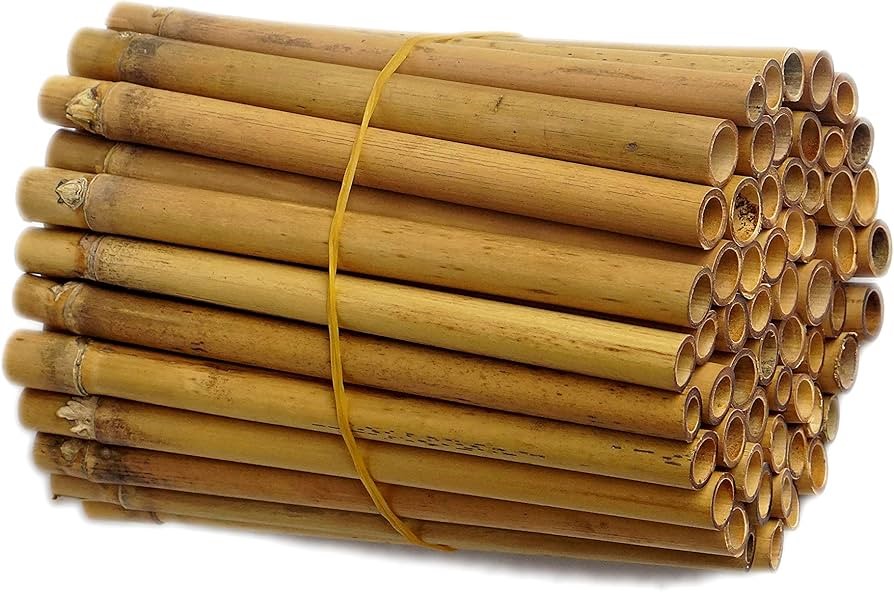
You can buy bee tubes, or simply use bamboo canes, and the dead stems of hollow plants and reeds. Cut your various tubes to 15cm in length. You can also drill deep holes of varying sizes (between 2-6mm diameter) into blocks of wood and logs, again about 15cm deep (angle them slightly upward so the rain doesn’t get in).
Then, fill your box with your tubes and blocks of wood. Squeeze all the tubes in together so they stay put. You’ll find it’s easier to wedge things into a box divided into compartments.
Position your box
Then, fix it firmly at about waist or chest height (bees don’t want to wave around in the wind), maybe on a fence or wall. Very importantly, place it facing south in a sunny position, near your bee-friendly flowers and shrubs.
Now watch
Adult female bees will visit the nest holes on sunny days in spring and summer. You’ll know they’re nesting if you see them flying in with pollen (some carry it on their bellies), blobs of mud to create cell walls along the tube, or with bits of leaf (these are the leaf-cutter bees).
You’ll be able to see if any of the holes have been used because the holes will be blocked with plugs of mud or leaves. The mother bees will lay eggs in those cells, leave them a supply of pollen and nectar for food, and then their work is done. The bee grubs will grow up in their tubes and hatch the next year to start life’s cycle over again.
SAFIMEX company is supplying Bamboo canes for insect hotels with a good price for bulk order. If you are interested in this product, please feel free to contact us at info@safimex.com or click at https://www.alibaba.com/product-detail/Sustainable-biodegradable-bamboo-straws-cheapest-price_10000016579021.html?spm=a2747.product_manager.0.0.78342c3cY70Woj
Source: The Royal Society for the Protection of Birds
SAFIMEX JOINT STOCK COMPANY
Head Office: 216/20a Duong Ba Trac Street, Ward 2, District 8, Hochiminh City, Vietnam.
Tel: (+84)-(28)-3636 2388 | (+84)-(28)-3636 2399 | Website: https://safimex.com/
