
Raw nata de coco is a chewy, gelatinous, and fibrous substance produced by the fermentation of coconut water, typically using the bacterium Acetobacter xylinum. Originating in the Philippines in 1949, it acts as a, translucent, and nutritious, low-calorie, high-fiber food that is popular in desserts and drinks.
Here are the key things you need to know about raw nata de coco:
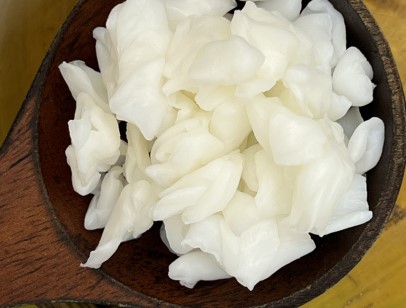
- Characteristics of Raw Nata de Coco
- Appearance and Texture:It forms as a thick, firm, white-to-creamy, jelly-like mat on the surface of coconut water during fermentation.
- Taste:In its raw form, it has a very mild taste, but it is often acidic due to the fermentation process, which necessitates washing and boiling before consumption.
- Composition:It is essentially pure cellulose, which is an insoluble fiber.
- Production and Processing
- Fermentation:The process involves mixing coconut water with sugar and nutrients, then adding Acetobacter xylinum
- Duration:The mixture is fermented for 7 to 14 days, during which the bacteria turn sugars into a thick layer of cellulose.
- Required Preparation:Raw nata de coco must be thoroughly washed with clean water multiple times to remove the acidic, vinegary taste.
- Boiling:It is typically boiled for 15–30 minutes to remove remaining acidity and ensure it is safe to consume.
- Nutritional Value
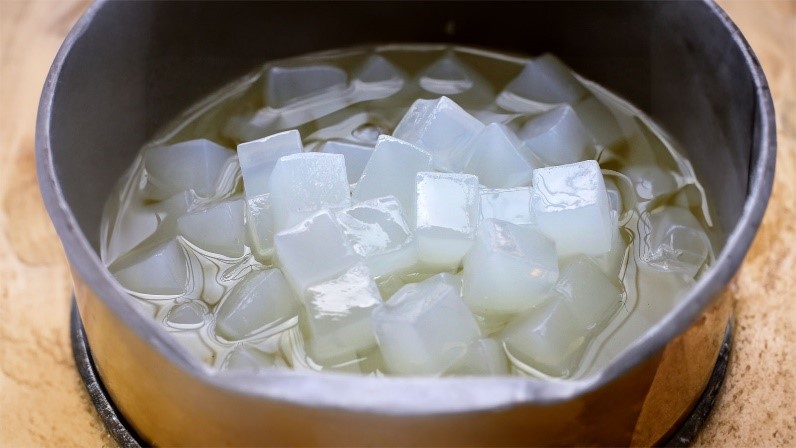
- High Fiber:It is rich in insoluble dietary fiber, aiding in digestion and promoting regular bowel movements.
- Low Calorie:Because the body cannot digest the cellulose, it is extremely low in calories, making it ideal for weight management.
- No Fat or Cholesterol:It is a heart-healthy, fat-free option.
- Nutrient Profile:While not high in vitamins, it can contain trace amounts of minerals like potassium and calcium.
- Uses and Culinary Applications
- Desserts & Drinks:It is famously used in Filipino halo-halo, fruit salads, and as a popular topping for bubble tea (boba) as a lower-calorie alternative to tapioca.
- Versatility:Its neutral taste allows it to absorb flavors, making it suitable for sweet syrups, yogurts, and cocktails.
- Important Considerations
- Storage:Raw nata de coco should be stored in a cool, dry place, usually packed in water or a mild syrup, to maintain its firmness.
- Moderation:While healthy, its high fiber content means eating too much can lead to digestive discomfort.
- Added Sugar:While raw nata de coco itself is low in sugar, commercial, pre-packaged versions are often soaked in high-sugar syrups.
- Safety
- Plant-Based:It is 100% plant-based, making it suitable for vegetarians and vegans
- Proper Processing:It is critical to properly wash and boil raw nata de coco to remove residual acetic acid and potential contaminants
Safimex company has supplying Nata de coco material with a good price for bulk order. If you are interested in this product, please feel free to contact us at info@safimex.com or click at https://www.alibaba.com/product-detail/Nata-de-coco-for-beverage-and_10000013928007.html?spm=a2747.manage.0.0.4fac2c3cCgXgF2
SAFIMEX JOINT STOCK COMPANY
Head Office: 216/20a Duong Ba Trac Street, Ward 2, District 8, Hochiminh City, Vietnam.
Tel: (+84)-(28)-3636 2388 | (+84)-(28)-3636 2399 | Website: https://safimex.com/
