
Lemongrass (Cymbopogon citratus) is a tall, perennial grass in a class of about 45 species of grasses native to the tropical and sub-tropical climates of Asia, Australia and Africa. India is the highest producer of lemongrass (producing over 2 million pounds per year), where it is cultivated along the mountain range of the Western Ghats and beside the foothills of Arunachal Pradesh and Sikkim in the Himalayan mountains.
How it Grows
Lemongrass has red base stems and can grow up to 10 feet in its favored habitat. The greatest time of growth is during the summer in moist, rich soil. If you’re thinking of planting lemongrass, just remember its roots tend to take over in a garden, so physical barriers should be put up whenever planting the grass near other plants.
Each stalk of lemongrass has several layers, each growing tightly wrapped around its core. The top layers are tough and green like a cornhusk’s outer layer. When peeled away, you will find the familiar inner white core of the lemongrass stalk, which best for cooking.
What to Look For
When buying lemongrass, it’s important to keep a few essential facts in mind:
- Look for firm stalks; stalks that are soft or rubbery will not yield good flavor.
- The lower stalk should be a pale yellow, while the upper stalks are green.
- Stay away from lemongrass that has brown outer leaves.
Once you’ve selected, consider these storage tips:
- If you find your stalks have dried out, place them into pots of soil. Within ten days or so, they will grow new, bright-green blades.
- Good-quality lemongrass can be stored in the refrigerator, tightly wrapped, for up to two weeks.
- Lemongrass freezes well. Some of the aroma and freshness may be lost when its frozen for long periods of time, but the unique flavor will remain and the grass will be easier to cut.
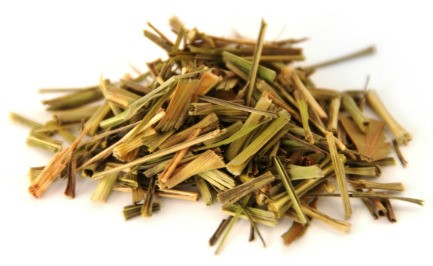
- Lemongrass stalks can also be cut into small pieces and dried. These dried pieces should be stored in airtight jars then used as is or ground to a powder before incorporating into a dish.
Lemongrass Processing: Steaming → Cutting → Withering → Drying
How to Use Lemongrass
IN TEA
In African and Latin American cultures, lemongrass is frequently used (fresh or dried) to make tea.
Teatulia’s Lemongrass Herbal Infusion is a delicate blend of lemongrass and bay leaf, both grown in our own USDA-Certified organic tea garden. The bay leaf adds a uniquely invigorating aroma to the citrusy lemongrass, making the drink extremely refreshing when served hot or iced. To prepare our Lemongrass Herbal Infusion, pour 8 ounces of boiling water over one pyramid tea bag or 2 grams of the loose leaf herbal tea, and steep for five minutes.
Because Teatulia’s Lemongrass Herbal Infusion is tisane (also known as herbal tea), it can be left steeping in water indefinitely without the flavor developing the burnt, metallic or bitter taste that black, green or white teas can develop if allowed to steep too long. Tisanes are not made from the leaves of a Camellia sinensis tea plant and therefore do not adhere to the same strict steeping times. Because tisanes do not contain the tea plant, they also do not contain caffeine.
IN FOOD
The lower stalk is widely used as an herb in cooking in Asian cuisine. Its mild citrus flavor is can be used in soups, poultry, beef and seafood dishes in its fresh, powered or dried format. When cooking with lemongrass, it’s usually best to remove all the outer layers, leaving just the tender white inner stalk. Many recipes call for “bruising” or bending the lemongrass several times to help release the flavor.
AT HOME
The oil extracted from lemongrass can be used for several different household purposes.
The characteristic bright citrus smell of the oil makes its beneficial for scenting soaps, detergents and insect repellent. The major use of lemongrass oil is as a source of citral, which is a popular ingredient in perfumes, cosmetics and beverages.
Lemongrass oil is most often used as a natural pest repellent in gardens to ward off insects. Despite its ability to repel insects, honeybees are attracted to the pheromones of the oil. This characteristic of the oil can be beneficial when trying to attract and capture swarms of bees. The oil is also used as an insect repellant ingredient in sprays, candles, soaps and aromatherapy. Research studies have shown the oil to have strong anti-bacterial and anti-fungal properties, making it an essential ingredient in household disinfectants.
This oil also makes a good preservative. In India it is applied to the ancient palm-leaf manuscripts. The oil injects natural fluidity into the brittle palm leaves and the hydrophobic nature of the oil keeps the manuscripts dry so the text is not lost to decay due to humidity.
Tasting Lemongrass
Teatulia Lemongrass Tea is one of our more popular herbals. It’s been described as a full-bodied and creamy with a zesty kick, like biting into a sweet citrus fruit. Refreshing with pure lemon essence and a touch of bay leaf. Naturally caffeine free, it comes in a whole leaf available as loose leaf or in our premium pyramid bags, or fine cut in our standard tea bags.
Jenny (Ms.)
—————————————————————————-
SAFIMEX JOINT STOCK COMPANY
Head office: 216/20A Duong Ba Trac street, Ward 2, District 8, HCM City
Mail: Sales1@safimex.com | Gmail: mytrangthanh5993@gmail.com
Skype: sales1.safimex | HP/WhatsApp: (+84)365713881|
Source: www.teatulia.com
